Professional Lawn Care Solutions: The Ultimate Guide to a Thriving, Gorgeous Lawn
Professional lawn care services play a crucial role in keeping a lawn vibrant and healthy. These professionals understand local conditions and provide customized solutions for soil health, fertilization, and pest control. Homeowners frequently overlook the advantages of professional intervention. A well-maintained lawn not only enhances curb appeal but also contributes to property value. However, choosing the right service can be challenging. What factors should homeowners consider when seeking professional help?
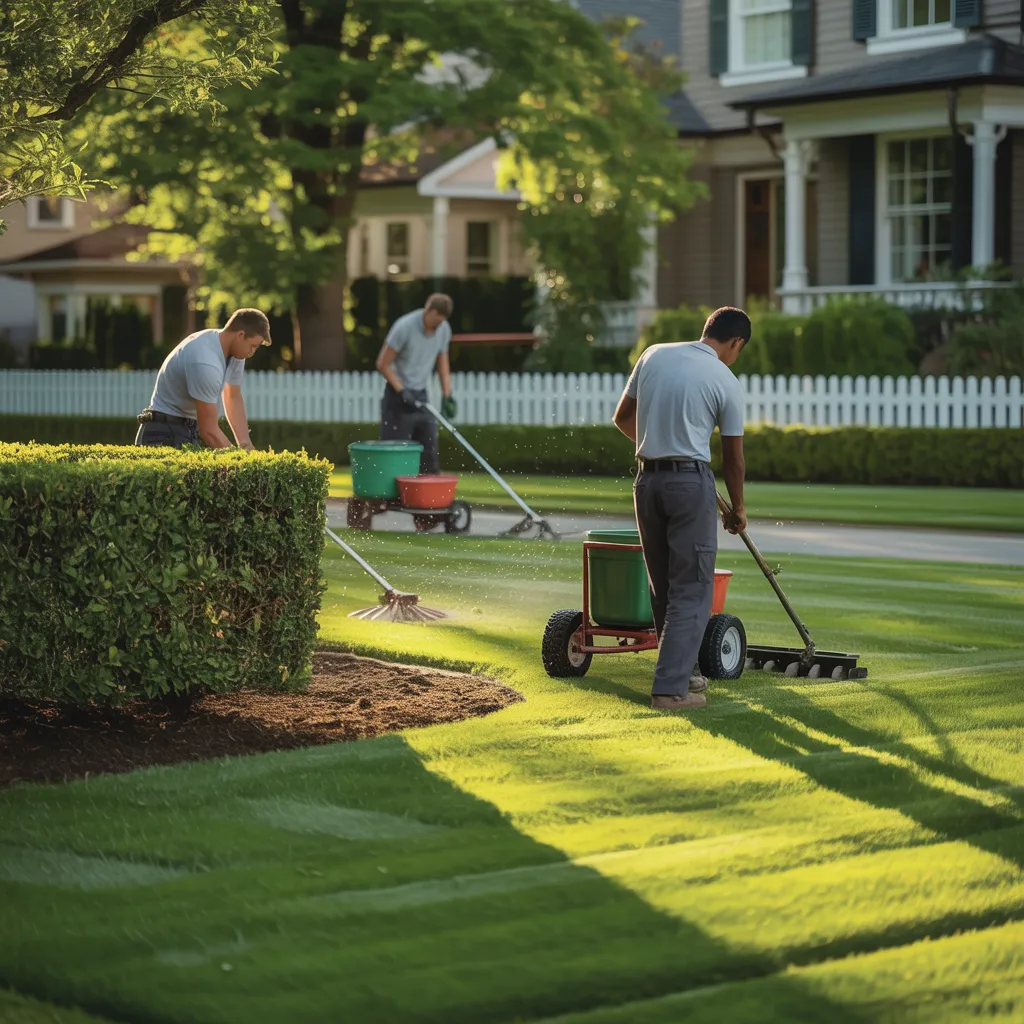
Why Professional Lawn Care Matters for Your Home
Although many homeowners may attempt DIY lawn maintenance, expert lawn care services deliver vital expertise that considerably boosts the health and aesthetics of a property's exterior landscape. Such professionals carry extensive knowledge of local soil composition, climate influences, and turf varieties, allowing them to tailor care strategies that yield superior results. Their expertise allows them to detect developing problems before they worsen, making certain that lawns continue to look lively and flourishing.
In addition, professional services utilize state-of-the-art equipment and premium products that are generally inaccessible to the standard homeowner. This serves to boost efficiency while also improving the comprehensive effectiveness of applications. By hiring professionals, homeowners can save time and reduce the likelihood of expensive errors. Ultimately, investing in professional lawn care encourages a healthier environment and elevates the aesthetic appeal of a home, resulting in higher property value and improved enjoyment of outdoor spaces.
Key Lawn Care Services: What the Pros Offer
Professional lawn care services encompass fundamental duties that promote a thriving landscape. Core offerings consist of soil condition evaluations to measure nutrient content, nutrient application and fertilization programs to encourage healthy development, and effective pest and weed control to maintain turf quality. These offerings help lawns maintain their health and beauty year-round.
Soil Health Assessment
Achieving a thriving lawn starts with robust soil, making soil health evaluation a vital service delivered by lawn care specialists. This evaluation includes analyzing soil composition, pH levels, and nutrient content to establish the general condition of the soil. Experts employ advanced tools and techniques to gather samples and evaluate them with precision. Upon discovering gaps or inconsistencies, they can propose targeted treatments and strategies designed to address the particular demands of the lawn. Additionally, soil health assessments help in understanding the microbial activity within the soil, which is crucial for nutrient cycling. In the end, a comprehensive evaluation establishes the foundation for successful lawn care practices, guaranteeing that the lawn gets the necessary support for optimal growth and durability.
Fertilisation and Nutrient Management
Fertilization and nutrient management are essential elements of successful lawn maintenance, greatly impacting the health and appearance of the grass. Specialists analyze the individual nutrient demands of the lawn, frequently using soil analyses to uncover nutritional shortfalls. This personalized strategy assures that the appropriate fertilizers are administered, fostering superior growth and durability. Lawn care experts typically recommend a balanced mix of nitrogen, phosphorus, and potassium, which are fundamental for strong advancement. Additionally, they schedule applications according to seasonal requirements, enhancing nutrient efficiency while limiting waste. Proper timing and technique in fertilization not only elevate the lawn's appearance but also strengthen its general condition, producing a rich, green yard that withstands environmental stressors effectively.
Pest and Weed Control
Maintaining a healthy lawn requires vigilant pest and weed control, as these invaders can quickly compromise its health. Skilled lawn care specialists utilize numerous techniques to efficiently address pests and weeds, ensuring the lawn stays healthy and flourishing. Integrated Pest Management (IPM) techniques are commonly used, blending biological, cultural, and chemical solutions to limit damage to beneficial creatures. Furthermore, professionals pinpoint particular weeds and pests, customizing their approaches to address these issues without affecting the nearby environment. Regular monitoring and timely interventions are essential, as early detection can prevent extensive damage. Through the use of sophisticated equipment and expertise, specialists not only eradicate existing infestations but also establish preventative solutions, guaranteeing lasting lawn vitality and visual attractiveness.
Choosing the Right Lawn Care Service: Key Considerations
How do homeowners go about finding the most suitable lawn care service to meet background information their needs? To begin, homeowners should evaluate their particular needs, including lawn dimensions, preferred services, and available budget. Investigating nearby companies plays a vital role, as homeowners can consult online reviews and gather suggestions from people in their community. It is also important to verify credentials, ensuring the service is licensed, insured, and certified by relevant professional organizations.
Next, prospective customers should look into the services offered, including organic treatments and tailored service packages. A reliable company will offer a comprehensive, transparent quote detailing the scope, pricing, and schedule. Moreover, homeowners should assess service responsiveness; effective communication and responsiveness are significant signs of a dependable provider.
Finally, scheduling a consultation can help homeowners evaluate the level of expertise and professionalism. By weighing these important aspects, homeowners can arrive at well-informed choices and ultimately achieve a vibrant, thriving lawn designed to meet their individual expectations.
What Happens in a Lawn Care Consultation?
What should homeowners anticipate during a lawn care consultation? Initially, a expert will assess the property, analyzing the lawn's overall condition, soil quality, and present vegetation. This inspection helps uncover specific concerns, such as pests, diseases, or nutrient deficiencies. Homeowners may be questioned about their lawn care objectives, preferences, and any prior treatments.
Upon completing the assessment, the consultant will provide tailored recommendations. These could involve the kinds of fertilizers or treatments needed, as well as a proposed care schedule. Residents will also receive instruction regarding best practices for mowing, watering, and pest control.
The consultation generally ends with an overview of pricing and available services, empowering homeowners to decide with confidence. This collaborative approach guarantees that the homeowner's goals are matched with expert knowledge, setting the foundation for a thriving lawn.
Seasonal Lawn Care Tips: Techniques for a Healthy Lawn
Successful lawn management necessitates a seasonal approach to guarantee optimal vitality and development. In spring, foundational preparations set the foundation for a thriving lawn, while warm-season care methods serve to preserve its strength. As autumn arrives, applying seasonal cleanup methods is vital for the lawn's resilience during the cold winter season.
Spring Readiness Fundamentals
As spring approaches, property owners should begin preparing their lawns for the season ahead. The initial step requires removing debris like leaves and branches that can smother the grass below, is essential for a healthy start. Aerating the soil is crucial, as it allows water and nutrients to seep deeper into the ground, fostering healthy root growth. Testing the soil pH can guide fertilization, ensuring ideal nutrient levels for healthy grass. It is also advisable for homeowners to overseed in order to address bare areas and boost the lawn's density. Applying a pre-emergent herbicide can help prevent unwanted weeds from taking root. Lastly, setting up a consistent watering routine is critical, since steady moisture levels play a significant role in maintaining a flourishing lawn. Together, these spring preparation measures establish the basis for a flourishing and beautiful outdoor area.
Summer Care Techniques
Preserving a healthy lawn during the summer months requires consistent care and proven methods. Correct watering practices are vital; lawns typically need about one inch of water per week, best administered early in the morning to reduce moisture loss. Trimming at the appropriate height—generally around three inches—supports robust root systems and minimizes turf stress. Moreover, consistent application of a slow-release nitrogen fertilizer supports healthy growth without the risk of burning the grass. Core aeration helps relieve compacted soil, permitting oxygen and minerals to infiltrate deeply. Lastly, watching for pests and fungal issues allows for quick action, preserving the integrity of your grass. By applying these techniques, homeowners can achieve a vibrant, resilient lawn throughout the summer.
Autumn Cleanup Techniques
A thorough fall cleanup is essential for preparing a lawn for the colder months ahead. The process starts with raking leaves to avoid smothering the grass, which may result in mold and disease. Furthermore, homeowners should remove any debris, including branches or dead plants, to encourage healthy growth in the spring. Aerating the soil is also an essential step, as it improves water penetration and nutrient absorption. Applying a fall fertilizer can also bolster the lawn's resilience against winter stress. Lastly, overseeding can boost density and cover bare spots, guaranteeing a lush, green lawn when warmer weather arrives. Putting these techniques into practice will help cultivate a vibrant lawn equipped to handle winter's challenges.
Avoid These Common Lawn Care Pitfalls
Lawn care success copyrights on awareness and strategy, yet many homeowners inadvertently commit common errors that can compromise their efforts. Among the most typical issues is improper mowing height; cutting grass too short can weaken roots and create a breeding ground for weeds. Additionally, excessive watering presents a significant problem, causing weak root development and heightened disease risk. Homeowners often overlook soil health too, overlooking pH testing and the addition of vital nutrients.
Another common pitfall is applying fertilizers or pesticides without understanding their application rates, which can cause harm to the lawn and surrounding environment. Timing is vital; applying treatments at the wrong season can yield poor results. Additionally, many fail to prioritize proper aeration, failing to relieve soil compaction that limits essential air and water flow. By recognizing these pitfalls, homeowners can better strategize their lawn care, resulting in a vibrant and thriving landscape.
Easy Tips for Keeping Your Lawn Healthy Between Services
Regular attention to lawn care between services can significantly improve the vitality and aesthetic of a lawn. Homeowners should start by mowing regularly, making sure mower blades are sharp to prevent grass tearing. Keeping grass at a height of approximately three inches supports deeper rooting and preserves essential moisture in the soil.
Adequate watering is necessary, but it should be done early in the morning to prevent excessive evaporation. A thorough watering one to two times per week is more beneficial than shallow, repeated watering.
Weed control is another important task; manually removing weeds or applying selective herbicides can stop them from stealing nutrients from your grass.
Applying fertilizer based on a schedule based on your grass variety and soil composition will supply vital nutritional elements.
Ultimately, aerating the lawn once or twice a year helps improve soil health and enhances water penetration. By following these simple tips, homeowners are able to preserve a beautiful and flourishing lawn between scheduled professional treatments.
Frequently Asked Questions
How Often Should I Have My Lawn Professionally Serviced?
Leading experts advise having a lawn professionally serviced once every 4 to 6 weeks over the course of the growing season. This schedule ensures optimal health, appearance, and upkeep, enabling prompt treatments and modifications based on seasonal needs.
What Types of Equipment Do Lawn Care Professionals Use?
Turf management specialists use a variety of machinery, including mowers, trimmers, blowers, aerators, and seeders. These tools enable them to keep lawns in top condition, promoting optimal health, aesthetics, and growth during every season of the year.
Is Organic Lawn Care an Option?
Organic lawn care options are indeed available. These methods utilize natural fertilizers, compost, and eco-friendly pest control, promoting healthier soil and ecosystems while reducing chemical exposure. A growing number of professionals now include organic practices as part of their services.
Do Lawn Care Services Provide Pest Control Assistance?
Absolutely, lawn maintenance professionals can aid in pest control by utilizing numerous methods and solutions. These specialists examine pest problems, provide fitting recommendations, and administer proven products to sustain a lush, thriving lawn while decreasing pest disturbances.
What Actions Should I Take if My Lawn Exhibits Signs of Disease?
Should a lawn exhibit signs of illness, one should assess the symptoms, enhance the drainage system, modify irrigation habits, and apply appropriate treatments. Consulting a professional for diagnosis and tailored solutions is frequently recommended for successful disease control.